
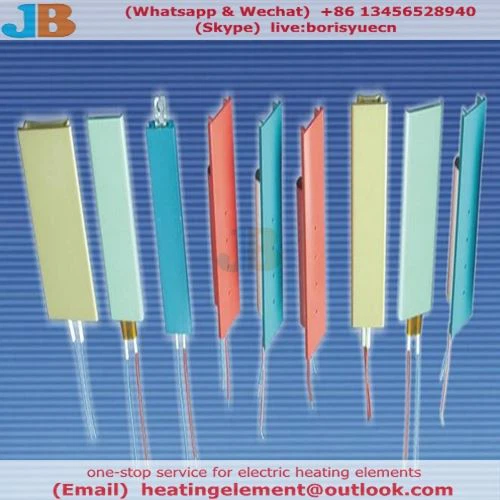
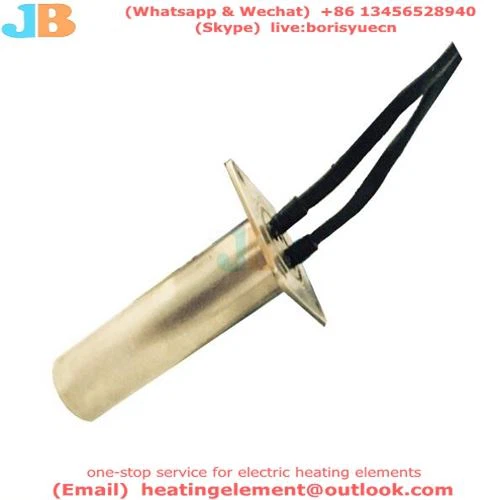
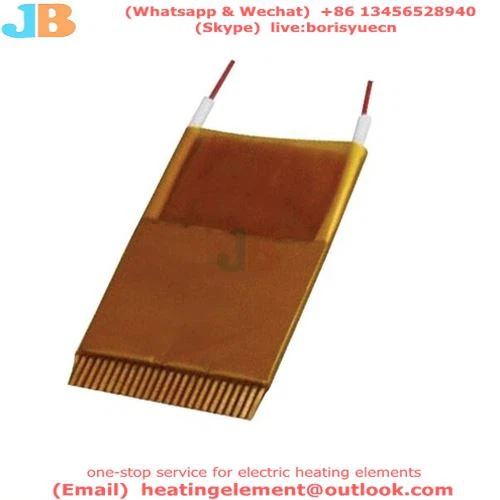
PTC heater is also called PTC heating element, which is composed of PTC ceramic heating element and aluminum tube. This type of PTC heater has the advantages of low thermal resistance and high heat exchange efficiency. It is an electric heater with automatic constant temperature and power saving. The outstanding feature lies in the safety performance. Under any application, the phenomenon of "redness" on the surface of electric heating tube heaters will not occur, which may cause burns, fires and other safety hazards.
PTC heater principle
The constant temperature heating PTC thermistor has the characteristics of constant temperature heating. The principle is that the PTC thermistor self-heats after being powered on to make the resistance enter the jump zone. The surface temperature of the constant temperature heating PTC thermistor will maintain a constant value. This temperature is only the same as the PTC The Curie temperature of the thermistor is related to the applied voltage, but basically has nothing to do with the ambient temperature. PTC heater is a heating device designed by using constant temperature heating PTC thermistor constant temperature heating characteristics. In small and medium-power heating places, PTC heating has the advantages of constant temperature heating, no open flame, high heat conversion rate, minimal influence of the power supply voltage, long natural life and other traditional heating elements. The application in electric heating appliances is becoming more and more popular. Favored by R&D engineers. The constant temperature heating PTC thermistor can be made into a variety of shapes and structures and different specifications, and the more common ones are disc, rectangle, strip, ring and honeycomb porous. Combining the above-mentioned PTC heating elements and metal components can form various forms of high-power PTC heaters.
PTC heaters are divided by conduction method
(1) PTC ceramic heater based on heat conduction. It is characterized by a multi-layer heat transfer structure such as an electrode plate (electrical conductivity and heat transfer), an insulating layer (electrical insulation and heat transfer), a thermally conductive heat storage plate (some with thermally conductive glue) mounted on the surface of the PTC heating element, and the PTC element The heat emitted is transferred to the heated object.
(2) Various PTC ceramic hot air heaters that conduct convective heat transfer with the formed hot air. It is characterized by large output power, and can automatically adjust the blowing temperature and output heat.
(3) Infrared radiation heater. Its characteristics actually use the heat quickly emitted from the surface of the PTC element or the heat-conducting plate to directly or indirectly stimulate the far-infrared paint or far-infrared material contacting its surface to radiate infrared rays, forming a PTC ceramic infrared radiant heater.
PTC heaters are divided according to structural characteristics
(1) Ordinary and practical PTC ceramic heater. Such appliances mainly include: electric mosquito repellent, hand warmer, dryer, electric heating plate, electric iron, electric soldering iron, electric heating adhesive, curling iron, etc. Its characteristic is that the power is not large, but the thermal efficiency is high and it is very practical.
(2) Automatic constant temperature PTC heater. Such appliances mainly include: small crystal device constant temperature bath, constant temperature incubator, electronic thermos bottle, incubator, thermos cup, insulation plate, insulation cabinet, insulation table, etc. It is characterized by automatic heat preservation, simple structure, good constant temperature characteristics, high thermal efficiency, and wide application environment temperature range.
(3) Hot air PTC heater. Such hot air PTC heaters mainly include: small warm air heaters, hair dryers, heating rooms, dryers, drying wardrobes, clothes dryers, industrial drying equipment, etc. It is characterized by high output hot air power, rapid heating, safety, and automatic adjustment of air temperature and power consumption.