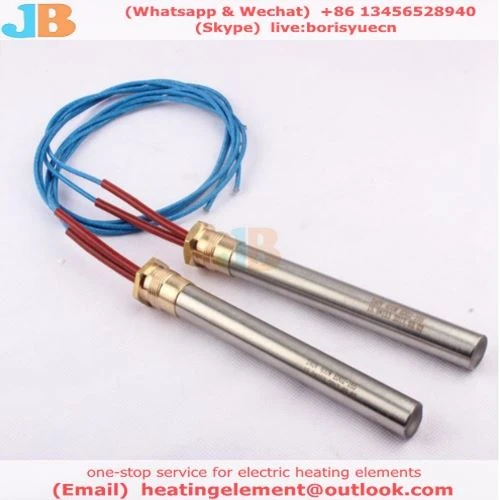
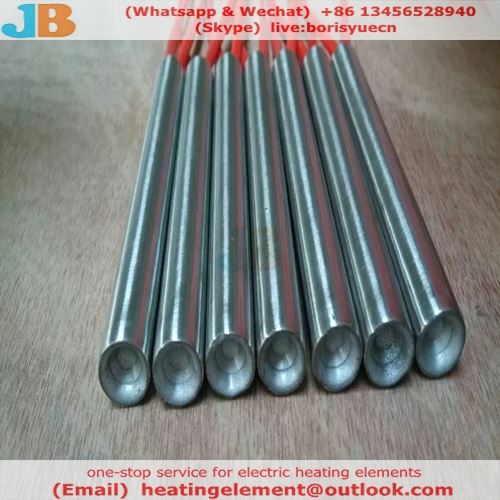
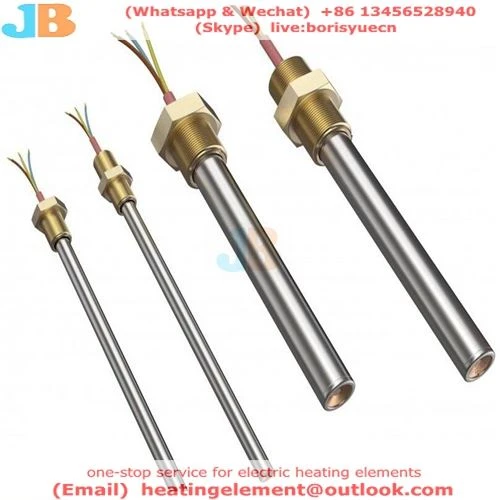
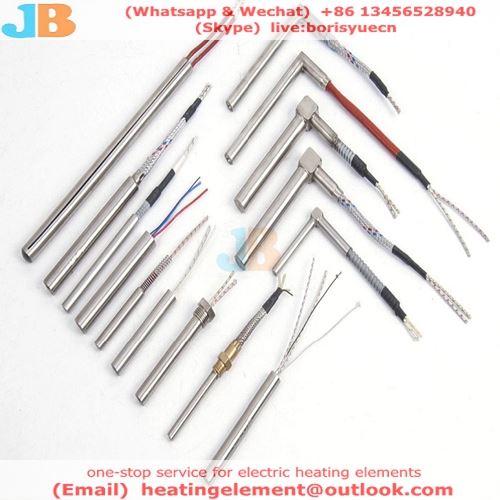
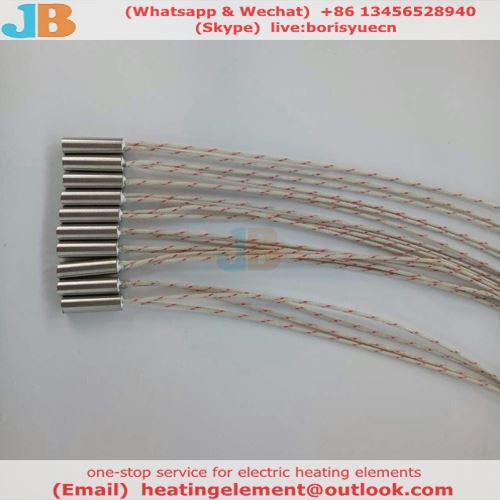
How to choose a satisfactory single-head electric heating tube? Some customers change the electric heating tube in about a month and have to look for the manufacturer again. This is why. Because the electric heating tube was burned out, I felt that the quality of the electric heating tube was not good, so I started to look for a supplier of electric heating tube that used longer and more durable. It is precisely because of this that it brings a lot of troubles to customers, and it also wastes unnecessary economic expenditures. When we meet a lot of new customers, it is normal to consult the price first and then the product is our own product. Such inquiries often outweigh the gains. In conversations with customers, many customers reported that the electric heating tube products purchased in some shops are often not used for a long time, and they are very regretful. The conversation found that customers have many problems, some are purchasing products that are not suitable for the equipment used, and some are cheap but the quality is not good. In short, there is a price advantage that outweighs the gain.
The service life of the single-head electric heating tube is closely related to the use environment. Therefore, when choosing electric heating tube products, we must first consider product quality and environment, and products that match our own equipment. Of course, there are also high-quality and high-priced products. How to choose high-quality and low-cost products from satisfactory products is also a technical task.
Regarding how to choose a suitable single-head electric heating tube, I personally suggest to refer to the performance requirements and the viewpoint of purchasing materials for reference:
1. The heating time is under the test voltage, and the time for the component to rise from the ambient temperature to the test temperature should not exceed 15 minutes.
2. Rated power deviation Under the condition of sufficient heat generation, the deviation of the component's rated power should not exceed the range specified below. For components with a rated power less than or equal to 100W: ±10%. For components with a rated power greater than 100W, it is +5% to -10% or 10W, whichever is greater.
3. Leakage current
The cold leakage current and the leakage current after the water pressure and sealing test should not exceed 0.5mA. The hot leakage current at the working temperature should not exceed the calculated value in the formula, but the maximum should not exceed 5mAI=1/6 (tT×0.00001)I —Hot leakage current mAt—heating length mm T-operating temperature °C When multiple components are connected in series to the power supply, the leakage current test should be performed on this group of components as a whole.
4. The cold insulation resistance during the factory inspection of the insulation resistance should not be less than 50MΩ. After the sealing test, the insulation resistance after long-term storage or use should not be the same as the thermal insulation resistance at the MΩ working temperature should not be lower than the calculated value in the formula, but The minimum should be no less than 1MΩ R=“(10-0.015T)/t”×0.001R—thermal insulation resistance MΩt—heating length mm T—working temperature ℃.
5. The insulation withstand voltage strength component should be kept for 1 min under the specified test conditions and test voltage without flashover and breakdown.
6. The components capable of withstanding power-on and power-off should be able to undergo 2000 power-on and power-off tests under the specified test conditions without damage.
7. The overload capacity component should withstand 30 cycles of overload test under the specified test conditions and input power without damage.
8. The heat-resistant component should withstand 1000 cycles of heat-resistant test under the specified test conditions and test voltage without damage.
The choice of materials is also necessary:
1. The back cover sheet is SUS304#, the thickness is 1.0mm, and the MgO pad is 99% high-purity or purified and oxidized by seawater. MgO powder USA imported electrical grade high temperature powder.
2. The outer shell is seamless steel pipe of SUS321# grade and above, and the thickness is above 0.9mm; heating wire imported from Japan Cr20Ni80 original heating wire.
3. The sealing material is mica, ceramic beads, and imported ceramic glue for sealing.
4. The lead wire goes out directly, and the Canadian imported multi-strand pure nickel wire with a temperature resistance of 500℃; usually the wire goes out 300mm.
Factory standard of single-head electric heating tube:
1. Diameter tolerance D (+0 -0.05 mm);
2. Length tolerance L (+1 -1mm);
3. Capacity tolerance W (+5% -10%);
4. Flatness requirements: ≤3‰; (1m long electric heating tube is placed on the horizontal plane, and the height of the tube wall from the center line at the highest point is ≤3mm)
5. Insulation resistance value ≥ 103MΩ (the vacuum plastic packaging bag can be kept for 3 months without opening);
6. Withstand voltage standard ≥ 1800V/S;
7. Visual requirements for appearance: smooth surface, no scratches, no spots, no dents;
8. Wiring strictly in accordance with the current carrying capacity standard in the electrician's manual;
9. Packaging requirements: vacuum packaging;
Through the above analysis, when purchasing electric heating tube products, you can identify what you need in terms of performance and material. The best quality and low-cost products can be selected. In fact, choose a good electric heating tube manufacturer to buyers or equipment users. It is very necessary to say.