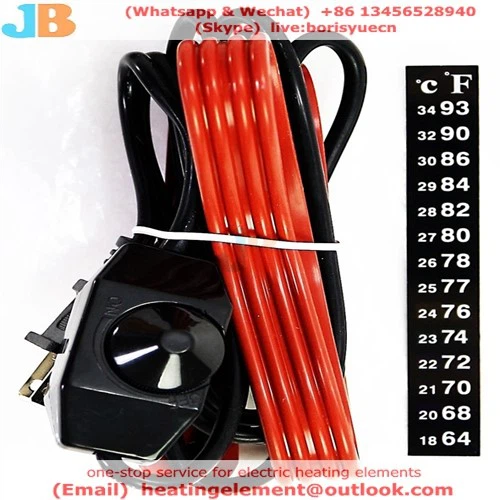
What do I need to pay attention to when brewing and fermenting in winter?
Because winemaking needs to be fermented, so the temperature is very high, the general temperature should not be lower than 15 degrees, the high temperature should not be higher than 40 degrees, the best fermentation temperature is between 25-36 degrees, so spring and summer is a good time for winemaking, but this does not mean that good wine cannot be brewed in winter, pay attention to the following factors, good wine in winter is not a problem.
Increase the inlet temperature
Under normal circumstances, the temperature of the cellar determines the fermentation speed and the top fire temperature. Control the temperature of the pool, grasp the temperature of the cellar, in order to adapt to the growth and metabolism of microorganisms, therefore, the winter temperature is low, in the drying and koji seeds when there is a slight delay, the temperature will soon drop, if the temperature is lower than 13 ° C, mold saccharification, yeast fermentation will be inhibited, the temperature is too slow, the amplitude is small, can not reach the top fire temperature, the wine yield is low, therefore, the use of increasing the pool temperature 2-3 °C, grab the temperature into the pool to the wine mash is in a good fermentation state.
Increase the starch concentration in the pool
In the production process of liquor, starch is the basic substance of the fermentation process. In order to meet the sufficient heat during the fermentation process of winter wine, the method of increasing the starch concentration in the pool is used to improve the activity capacity of microorganisms.
Increase the amount of curvature
During fermentation, Daqu is a crude enzyme preparation in which a variety of microorganisms gather. Due to the increase in feeding after winter, the starch content is correspondingly increased, in order to ensure the effective progress of saccharification fermentation, it is necessary to increase the amount of Daqu to meet the fermentation demand.
Control the moisture entering the pool
Considering that the temperature is low in winter, the evaporation of water is small, and most of the new grain used is the year, the moisture content is large, and the moisture of the cellar must be tested and tested, and the water should be used as appropriate, and it should not be blindly added. Under normal circumstances, if the moisture is too large, the mash is sticky, the porosity is small, the oxygen content in the mash is small, and the aerobic yeast cannot grow and reproduce. Therefore, the moisture in the pool should generally be 54~56%.
Appropriately increase the acidity of the mash
Winter is the high-yield season in the winemaking industry, but if the acid in the mash is too low, it will affect the acid alcohol esterification, so that the aroma of the wine is not strong, and even the main aroma is not prominent. This is because the low temperature slow fermentation acid amplitude is small, wine production is abnormal, in most of the fermentation process, to maintain high alcohol and appropriate acidity, for ester production has an important role, but also conducive to the production of the lower row, so consider grain mash acidification, generally into the pool acidity control between 1.2 ~ 1.7 is more appropriate.
Although winter sake brewing is difficult, it also has advantages that cannot be achieved in other seasons, such as less bacteria in winter, easy control of the brewing temperature, and high wine yield.