
The typical structure of stainless steel electric heating pipe is generally composed of five parts: insulator, sealing material, guide rod, filler, heating wire, metal sheath tube and terminal terminal.
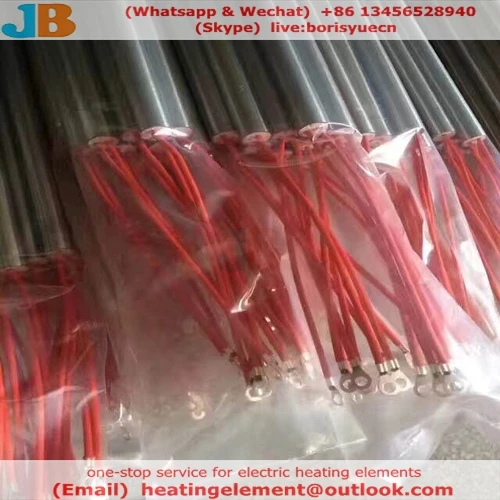


The spiral heating wire and outlet rod are located in the center of the metal sheathed tube. The manufacturing process is to penetrate a spiral heating wire through a seamless steel, copper or aluminum tube, and evenly fill an oxidation medium that is both insulated and thermally conductive by a multi-tube filling machine, such as crystalline magnesium oxide powder (alumina or clean quartz sand can also be used). Then use a pipe shrinking machine to reduce the pipe diameter, so that the oxide medium is dense (density exceeds 3.3g/cm3), to ensure that the heating wire is isolated from the air, the center position is not offset, and the pipe wall is contacted. Such. The heat per unit area can increase by more than tenfold. The service life can also be increased to more than 10 years accordingly. Compared with the same electric heating element with large heat, the tubular electric heating tube can save 5% of the electric heating material, and the thermal efficiency can reach more than 90%.
From the perspective of the structure of the electric heating tube, the metal tubular electric heating tube is a kind of sealed electric heating element, which is widely used, simple in structure, reliable in performance and long in service life, and can be successfully used in industrial and household appliances.